Bermuda Shorts and Dressing for No One but Myself
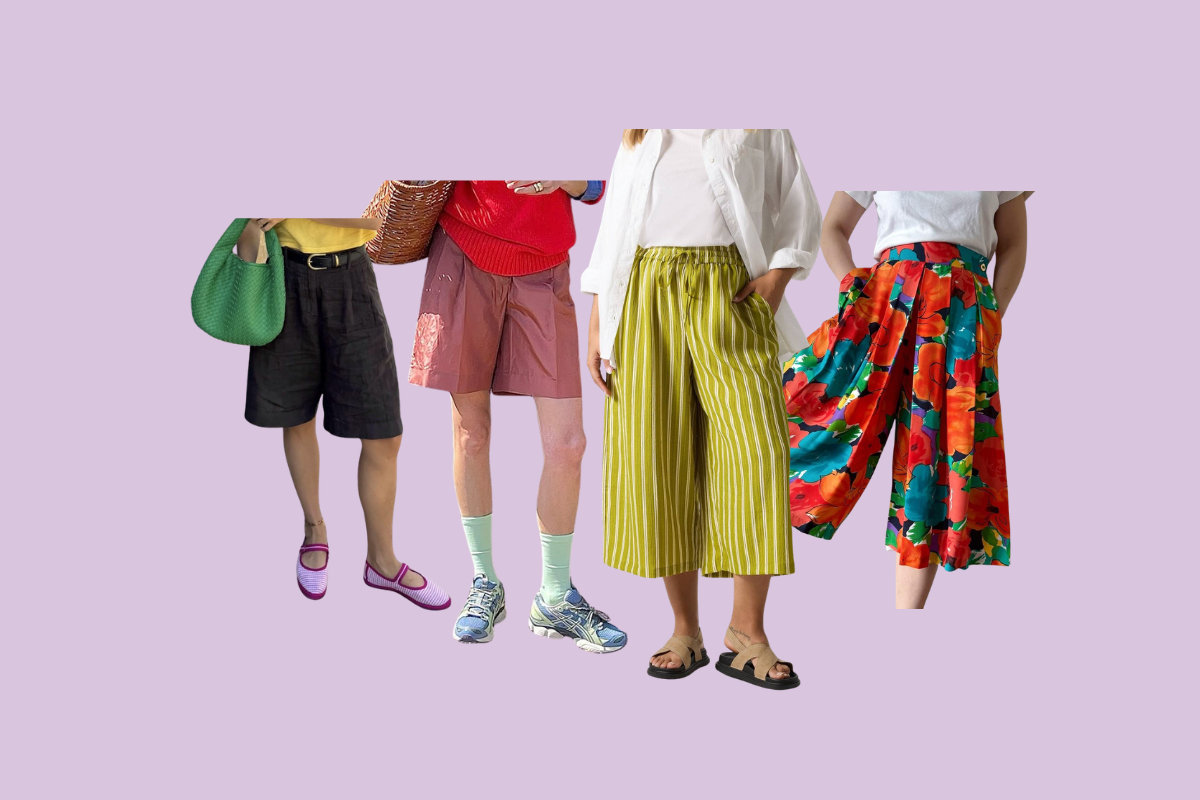
Recently I’ve made it my mission to follow women who dress boldly. It sounds silly, and you might think it’s a vanity thing, but it’s actually the opposite. What I noticed in all of them was a massive sense of self and empowerment. You can see it in their smiles when they twirl around for their outfit of the day posts. Most of them are women like me: millennials with kids and careers, who’ve found this one part of life that’s entirely theirs. They wear colourful outfits, things they thrifted, things they made themselves. Outfits men might not traditionally go for, but other women love on sight.
A common thread runs through almost all of them. They mention they don’t dress for the male gaze. Quite the opposite, actually: I don’t want you to like me, I want to dress in whatever makes me, and only me, happy. That confidence. I can only wish I could go back to my 19 year old self and hand her a kernel of it.
But here we are anyway. We got here. 36, and confident enough to know that yes, I’m going to wear the barrel trousers and the shirt with the massive collar that accentuates my wide frame. I know it’s not the “best” outfit for my body shape. I also know I have fifty outfits exactly like that saved on Pinterest, and I admire them regularly. I’m not wearing them while waiting for some fashion police to show up and say “right, straight to jail, you’re in your thirties and you clearly don’t know how to dress for your body type.”
Well. You know what, imaginary fashion police: I don’t need to dress for my body type. I need to dress for myself, for my own entertainment, and my soul is telling me to wear Bermuda shorts this summer. Yes, those shorts that end above the knee and show off the scar from when I wiped out cycling to work back in 2020. Who cares? Not me. Certainly not me.
So let’s do this. Let’s wear what we want, how we want it, in whatever fabric we choose. And if sewing your own is a skill you haven’t picked up yet, let’s do it together. I’ve put together five patterns for us to look through, and soon I’ll come back with a follow-up post to show you how mine turned out.
Why Bermudas, specifically
There’s a particular kind of freedom in shorts that actually fit, properly, on the body you have right now rather than the one you used to have or might have someday. A good Bermuda sits just above the knee with enough room through the hip and thigh that nothing digs in. No pinch points, no waistband sitting awkwardly over scar tissue, no fighting the fabric just to sit down comfortably.
Linen and cotton make the difference in summer heat. Heavy denim becomes a liability once the temperature climbs. Linen moves with you, wrinkles in a way that looks deliberate, and dries quickly if you end up near water. Cotton gives a bit more structure while still breathing.
And Bermudas work with everything. Tank tops, oversized tees, a vintage button-up, a cardigan thrown over the top when the evening cools down. One pair reads a dozen different ways depending on what you put with it.
Mostly though, they let you stop negotiating with your clothes. You’re not trying to get back into anything. You’re just wearing shorts that fit the body you’re currently living in, today, this summer.
What to look for in a pattern
A few things genuinely matter once you’re choosing which pattern to make.
Waistband style. Elastic waists are the most forgiving, especially if your waistline has changed or you’re sensitive around any scarring. Flat-front styles with a structured waistband or pleats look more tailored, but they ask more of you in terms of fit.
Pockets. Functional ones, not decorative. Side seam pockets sit flat against the thigh and don’t add bulk at the hip the way patch pockets can.
Length. Just above the knee is the sweet spot for most Bermudas. Long enough to feel like a proper short, short enough to actually wear in summer.
Ease. Look for a pattern with built-in room through the hip and thigh. You want the fabric to sit gently against you, not cling.
Three free patterns to start with
1. Unfettered Patterns #UP1055, the relaxed everyday option
Download at unfetteredpatterns.blog
Mid-thigh Bermudas with a drawstring waist and side seam pockets. Drafted for beginners with minimal finishing required, and genuinely lovely in linen, cotton voile, or viscose. This is the pair you’ll actually reach for on a Tuesday.
2. Unfettered Patterns #UP1022, for something more tailored
Download at unfetteredpatterns.wordpress.com
Pleated waist, proper fly, slash pockets, back darts. Structured without being stiff, and the pleats give you room exactly where you need it. A bit more involved to sew, but it reads as more “put together” if that’s what you’re after.
3. Tiana’s Closet, Kelsey Elastic Waist Bermudas
A single layered PDF covering XXS through 5XL, so you print only the size you need. Straightforward elastic waist, clear instructions, nothing tricky to finish. A good choice if you’re newer to fitted garments, or if your body is still changing and you want room to adjust.
How to sew them, the general idea
Every pattern below comes with its own instructions, and those always win over anything general. Still, if you have never made a pair of pull-on shorts before, it helps to see the shape of the job first. Here is the whole thing in ten plain steps.
How to Sew Pull-On Shorts
Whichever pattern you pick has its own instructions, and those always win. This is just the shape of the job, start to finish.
-
1
Finish the raw edgesoptional
Overlock or zigzag the cut edges of each piece first, or neaten each seam as you go.
-
2
Add the pockets
Stitch a pocket to each leg, press it away from the leg, and understitch so it stays hidden.
-
3
Join the outside seams
Front on back, right sides together, pinned and stitched down each side (curving round the pocket).
-
4
Sew the inside leg seams
Right sides together from hem to crotch on each leg. You now have two separate tubes.
-
5
Stitch the crotch seam
Turn one leg out and slip it inside the other, match the inner seams, then sew the curve front to back in one pass.
-
6
Make the waistband loop
Join the short ends of the band into a ring and press the seam open.
-
7
Attach the waistband
Fold it, pin to the top of the shorts, stitch all the way round, and leave a small gap at the back.
-
8
Thread the elastic
Feed it through on a safety pin without twisting, overlap and zigzag the ends, then close the gap. (A drawstring goes in the same way.)
-
9
Check the fit
Try them on and adjust the elastic until it sits comfortably.
-
10
Hem and press
Turn up the legs to the length you like, give everything a good press, and you are done.
This covers an elastic or drawstring waist. A fly or fixed waistband follows a different route around steps 6 to 8.
@caramba.crafts
The fabric that changes everything
Linen is the gold standard for Bermudas. It breathes, it softens with every wash, and the wrinkles read as intentional rather than careless. It’s not cheap, and you’ll be reaching for the iron more than you’d like, but the trade-off is worth it. Budget around 2 to 3 metres of 150cm-wide fabric, and pre-wash it, since linen shrinks.
Cotton is the reliable choice. Skip quilting cotton (too stiff for this) and look instead for cotton voile, lawn, or sateen, which all have enough drape to feel summery without going limp. Affordable, widely available, presses beautifully.
Cotton-linen blends split the difference nicely if you want the breathability of linen with a touch more structure and less ironing.
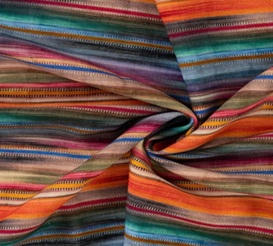
Linen-viscose blends are my current favourite for this, and they’re what you’ll find in the shop section below. The viscose gives linen a softer, more fluid drape, so the shorts move beautifully and feel lovely against the skin, while the linen keeps them breathable and summery. They tend to be a little finer and more slippery than pure linen, which is worth knowing before you cut.
That slipperiness brings me to one small but genuinely useful tip: your needle. A linen-viscose blend sews best with a universal 80/12 needle, which handles most linens and light-to-medium wovens well. If your blend is on the finer, drapier side and you notice the fabric puckering or the needle leaving visible holes, drop down to a 70/10. And if your machine starts skipping stitches on a tightly woven blend, switch to a Microtex (also called a sharp) needle, its fine point pierces densely woven fabric cleanly. Always test on a scrap first, since the right needle is the difference between a seam that sits flat and one that puckers.
Skip anything heavyweight or synthetic. Summer shorts should feel like part of the weather, not a barrier against it.
Shop this post
This post contains affiliate links to sewing supplies. I may earn a small commission at no extra cost to you.
Shop this post
This post contains affiliate links. I may earn a small commission at no extra cost to you.
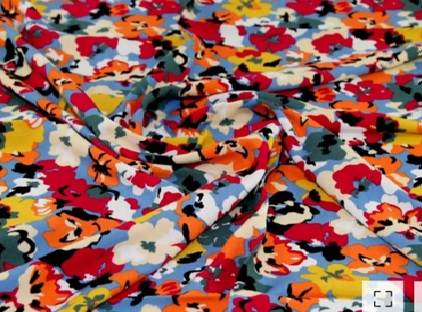
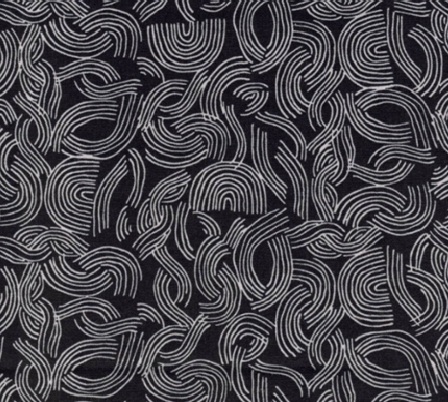
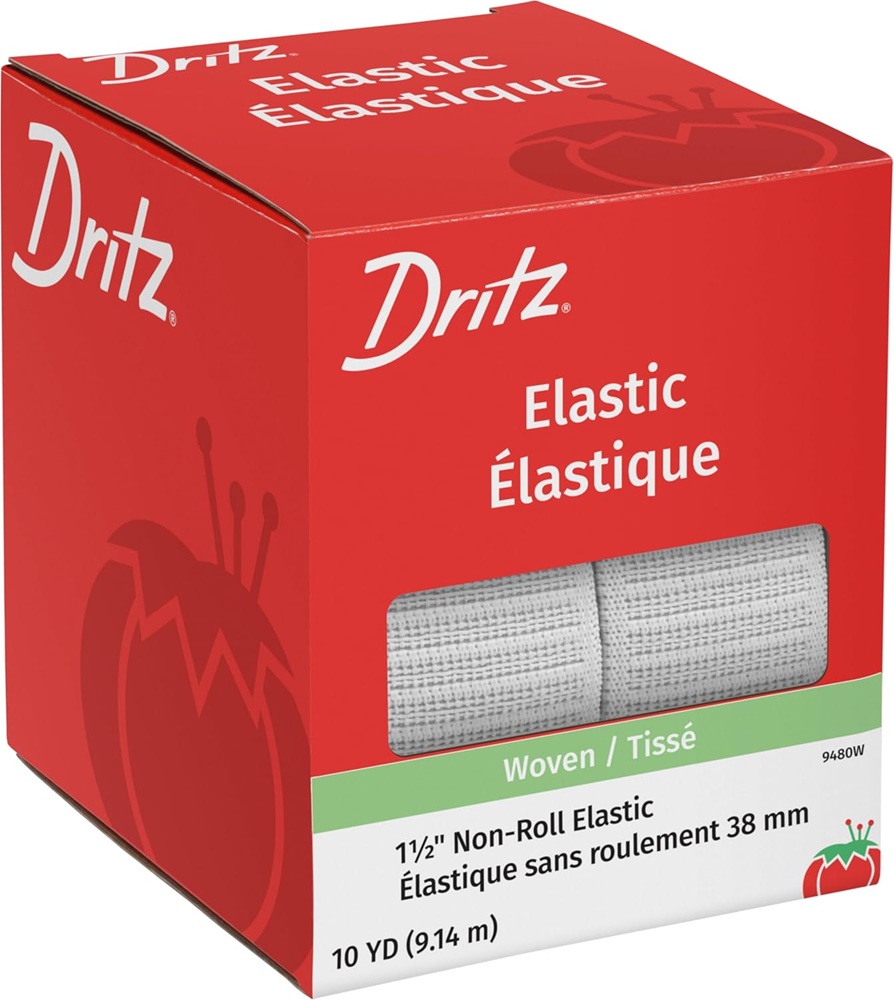
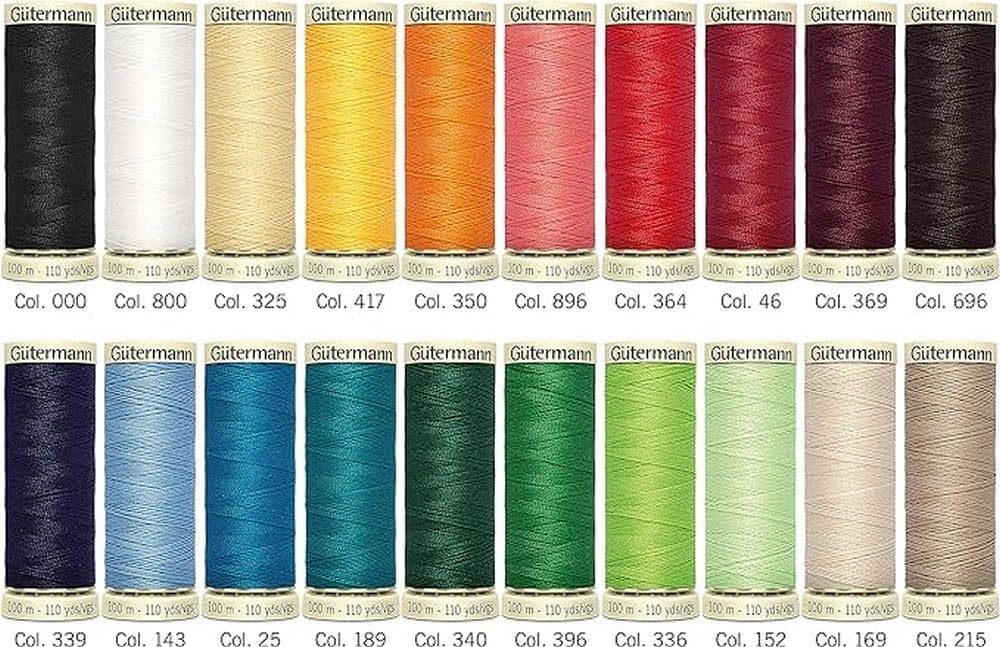


Made a pair yet? Tag @caramba.crafts on Instagram or Pinterest. I’ll be back soon to show you how mine turned out, scar and all.
All pattern images and patterns featured in this post belong to their respective creators and are used here for reference and recommendation purposes only. Patterns and images are sourced directly from the links provided throughout this post: Sparrow Refashion, Unfettered Patterns, Tiana’s Closet, and Frills and Flares. No copyright infringement is intended. All credit goes to the original creators whose work is being celebrated here. Please visit their websites directly via the links in this post to see their full pattern collections.