Beginner Sewing Kit: What I’d Buy If I Was Starting to Sew Today
If I was starting to sew today, knowing everything I know now, I’d build my beginner sewing kit completely differently.
When I started, I wasted money on gadgets I never used, cheap tools that fought me every step of the way, and fabric I had no business buying. Meanwhile, the things that actually mattered – the ones I use on every single project — I didn’t buy until much later.
So here it is: the exact beginner sewing kit I’d buy today if I was starting from scratch. No fluff, no “nice to haves” disguised as essentials — just what you genuinely need, roughly in the order I’d buy it.
1. A Reliable Sewing Machine (Not the Most Expensive One)
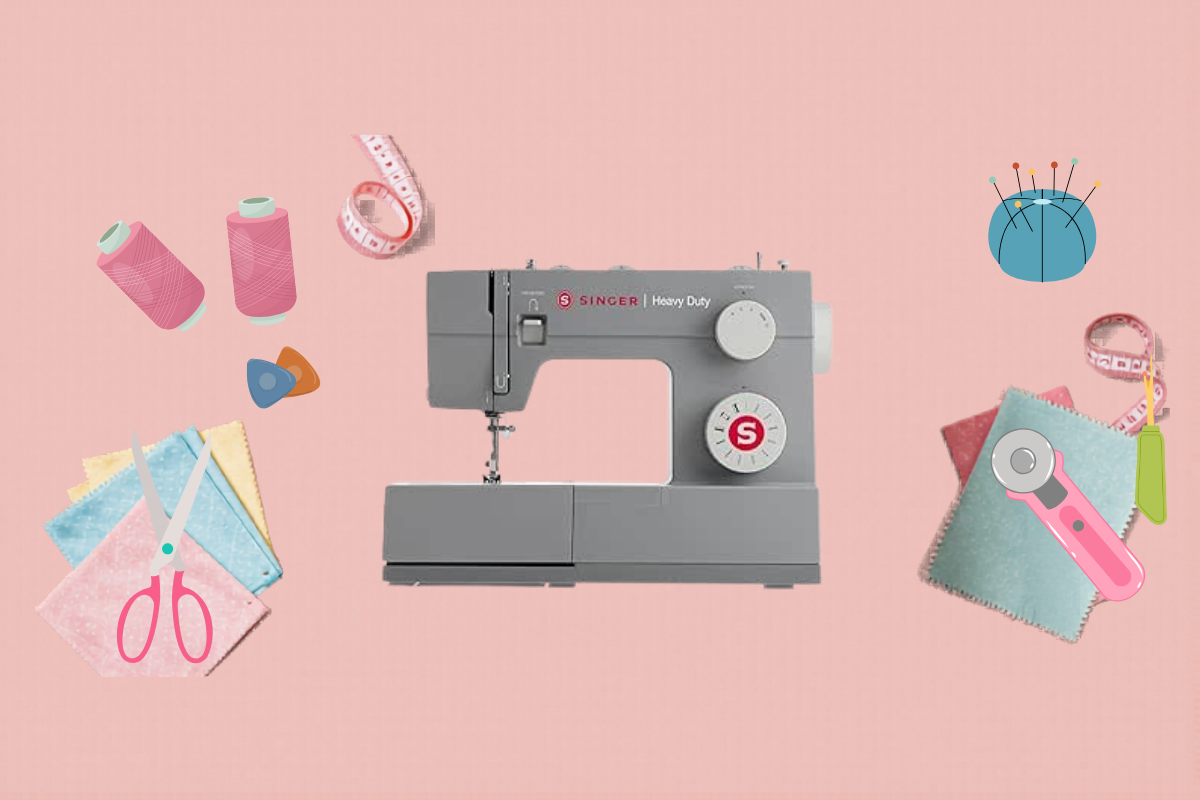
I’d skip both the £60 toy machines and the £600 computerised ones. A solid mechanical machine from a trusted brand (e.g., Brother, Janome or Singer) with a handful of stitches is all a beginner needs. You want straight stitch, zigzag, a buttonhole, and adjustable stitch length. That’s it.
What I’d look for: a metal frame, a drop-in bobbin (so much easier than front-loading), and a free arm for sewing sleeves and bags.
My pick: heavy duty sewing machine link
Budget: £120–£250
2. Quality Fabric Scissors – and a Rule to Protect Them
The single biggest upgrade to my sewing was decent shears. Cheap scissors chew fabric instead of cutting it, and that ruins projects before you’ve sewn a stitch. Buy one good pair, and make the rule every sewist knows: nobody touches them for paper. Ever.
My pick: fabric shears link
Budget: £15–£30
3. Rotary Cutter, Self-Healing Mat and Quilting Ruler
If I could go back, I’d buy these on day one instead of year two. This trio makes cutting faster, straighter and genuinely enjoyable. For anything with straight lines – pouches, totes, coasters, bowl cozies – it’s life-changing.
A 45mm rotary cutter, an A2 mat and a 6″ × 24″ clear acrylic ruler cover almost everything.
My picks: rotary cutter, A2 cutting mat and quilting ruler
Budget: £30–£50 for all three
4. Sewing Clips (Yes, Instead of Mostly Pins)
I sewed with pins for years before discovering clips, and now I reach for clips 90% of the time. They hold thick layers, never leave holes, and you’ll never hoover one out of the carpet. Keep a small box of pins too — but clips first.
My pick: sewing clips
Budget: £5–£8
5. Good Thread (This One Surprised Me)
Bargain-bin thread snaps, sheds lint into your machine, and causes half the tension problems beginners blame on themselves. A few spools of quality all-purpose polyester thread – Gütermann is the classic – in white, black, cream and grey will see you through your first twenty projects.
My pick: thread set
Budget: £10–£15
6. A Seam Ripper You Don’t Hate
You will unpick stitches. Everyone does – it’s not failure, it’s sewing. A sharp, comfortable seam ripper makes it a thirty-second job instead of a frustrating one. Buy two, because you’ll lose one.
My pick: seam ripper
Budget: £3–£6
7. An Iron and a Pressing Routine
Here’s the secret nobody tells beginners: pressing is half of sewing. The difference between “handmade” and “homemade” is usually the iron, not the machine. You don’t need a fancy one — any iron with decent steam works. If you’re short on space, a tabletop ironing mat beside your machine changes everything.
My picks: steam iron and tabletop pressing mat
Budget: £20–£40
8. Marking Tools That Actually Disappear
A heat-erasable pen (like a Frixion) or water-soluble fabric marker, plus a bit of tailor’s chalk for dark fabrics. Always test on a scrap first – ask me how I know.
My pick: fabric marking pens
Budget: £5–£10
9. Machine Needles in More Than One Size
Most machines come with one sad universal needle. I’d buy a mixed pack on day one: universal 80/12 for quilting cotton, 90/14 for canvas and bags, and a few jersey/ballpoint needles for knits. Change your needle every couple of projects , a fresh needle fixes more problems than any tension dial.
My pick: machine needle assortment Budget: £25
10. Basic Haberdashery Box
A small starter stash so you’re never stalled mid-project: a tape measure, hand sewing needles, extra bobbins for your machine, a turning tool (a chopstick works!), and a box to keep it all in.
My pick: haberdashery starter kit
Budget: £10–£15
11. Cheap-and-Cheerful Practice Fabric
This is the one I really wish someone had told me: don’t learn on fabric you love. I’d buy a bundle of plain quilting cotton or fat quarters, plus an old bedsheet from a charity shop, and treat them as my learning material. Save the beautiful prints for when your seams are straight.
My pick: fat quarter bundle Budget: £10–£15
What I Wouldn’t Buy (Yet)
Just as important as what’s in the kit is what’s not:
- An overlocker/serger – wonderful machines, but not for month one. Your zigzag stitch can finish seams for now.
- Speciality presser feet sets – those 32-piece kits look like a bargain, but you’ll use three of them. Buy feet as projects demand them.
- A fabric stash – buying fabric and sewing fabric are two different hobbies. Buy for the project in front of you.
- A dress form – gorgeous, aspirational, and completely unnecessary until you’re fitting garments.
- Embroidery attachments and gadgets – master the basics first; the gadgets will still be there.
The Total: A Realistic Beginner Sewing Kit Budget
Adding it all up, my “starting from scratch” beginner sewing kit comes to roughly £255–£465, with the machine being more than half of that. If that’s too much at once, here’s the order I’d buy in:
- Machine, scissors, thread, needles and a seam ripper – you can sew tonight with just these
- Iron routine + marking tools – instant quality upgrade
- Rotary cutting trio + clips – speed and accuracy
- Everything else as projects need it
Beginner Sewing Kit FAQ
Do I need an expensive sewing machine to start sewing? No – a basic mechanical machine from Brother, Janome or Singer with straight stitch, zigzag and a buttonhole will handle every beginner project, including bags, cushions and simple clothing.
What is the most important sewing tool for beginners? After the machine itself: sharp fabric scissors and a good iron. Clean cutting and proper pressing improve your sewing more than any gadget.
Can I learn to sew without a sewing machine? Yes – hand sewing is a brilliant way to start, and projects like felt decorations, simple repairs and embroidery need no machine at all. But if you want to make bags, clothing or home decor regularly, a machine pays for itself in time saved.
How much does it cost to start sewing as a hobby? A realistic beginner sewing kit costs £255–£465 including the machine. You can start for under £150 with a budget machine and the bare essentials, then add tools as you go.
Ready to put your new kit to work? Have a look at my 15 Things to Sew and Sell for Extra Income — every project includes a free pattern.
Pin this beginner sewing kit list for later so you can shop it when you’re ready!